Blog
Notes from the team building Brilliant. Product, craft, and the quiet engineering behind designing with agents.
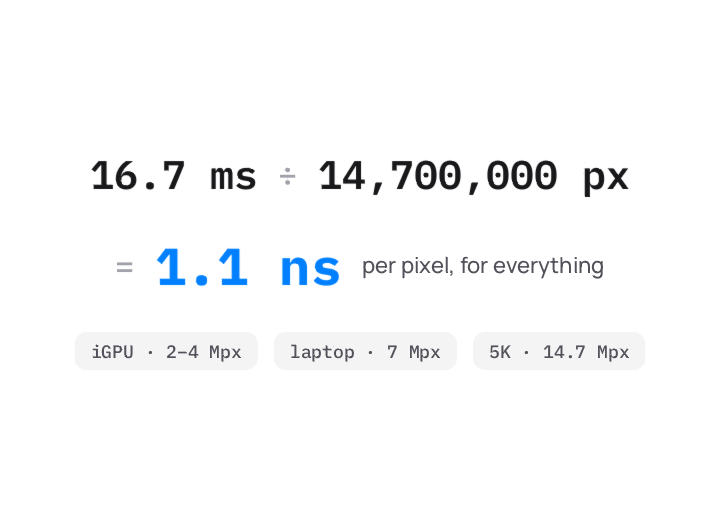
The math behind Brilliant's renderer: a budget of nanoseconds per pixel
One frame divided by one viewport leaves a few nanoseconds per pixel for everything. The cost laws behind that budget, why some caches are provably a bad idea, the measured result that replaced one of them, and where the arithmetic honestly stops closing.
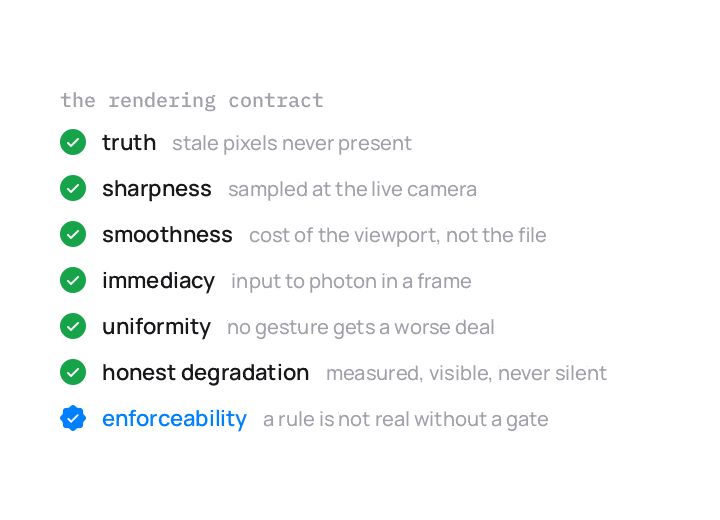
Amichai Mantinband7 min readBrilliant's rendering contract: seven things a frame never trades
Perf work fails by winning benchmarks and trading away what you can feel. We wrote our rendering values down, gated them with tests, and let them delete work we were proud of. All seven, with the moments each one earned its keep.
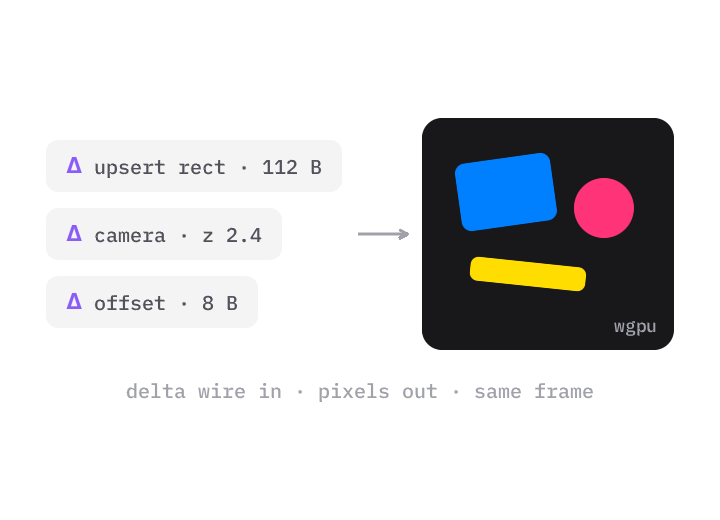
Amichai Mantinband7 min readOne renderer: moving Brilliant's canvas to Rust and wgpu
Why we deleted the Flutter painter instead of caching around it, how Dart stays in charge of everything but the pixels, and the optimization we were sure we needed until we measured it.
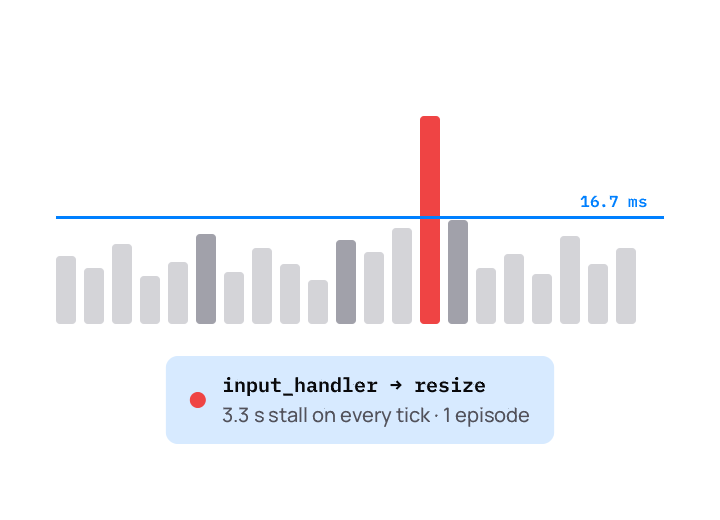
Amichai Mantinband8 min readHow Brilliant hunts jank: a profiler that writes the verdict
A late frame leaves no stack trace, so we built a recorder that captures a real session and writes down what was slow and why. Plus the measurement culture that would rather say 'I don't know' than lie.
Amichai Mantinband10 min readHow Brilliant's canvas stays fast at 13,000 elements (and why selection draws two rectangles)
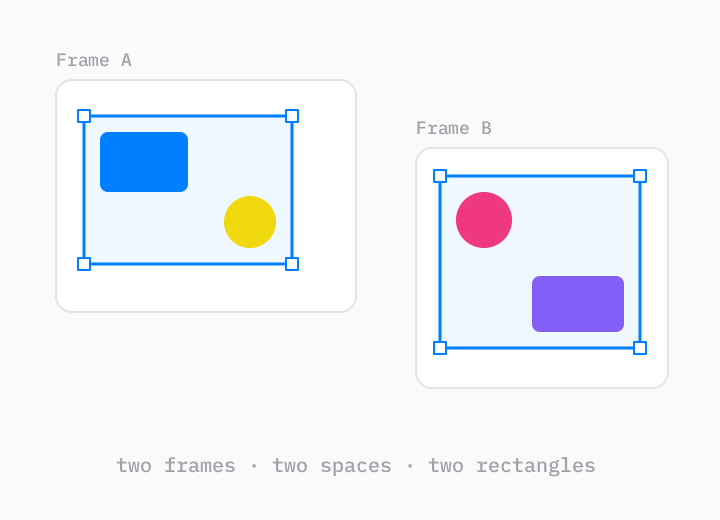
Brilliant treats the canvas as a hierarchy of coordinate spaces, not a flat pile of shapes. A tour from the spatial index that keeps 13,000 elements fast down to the per-parent selection model that keeps operations correct.
Amichai Mantinband8 min readIn Brilliant, a design system is a short program
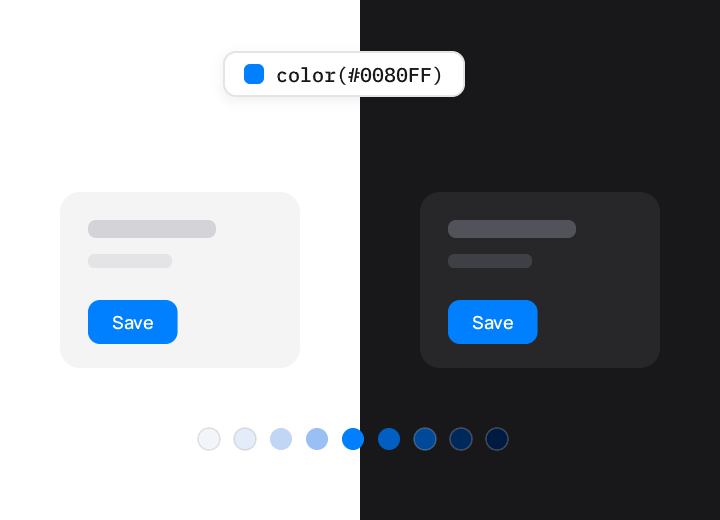
In Brilliant, tokens come from a compiler: a few seed lines expand into every stop, role, and per-mode variant through OKLCH math. The part we're proudest of is modes as transforms, not duplicated palettes.
Amichai Mantinband8 min readYour key, your traffic: why Brilliant's AI is BYOK
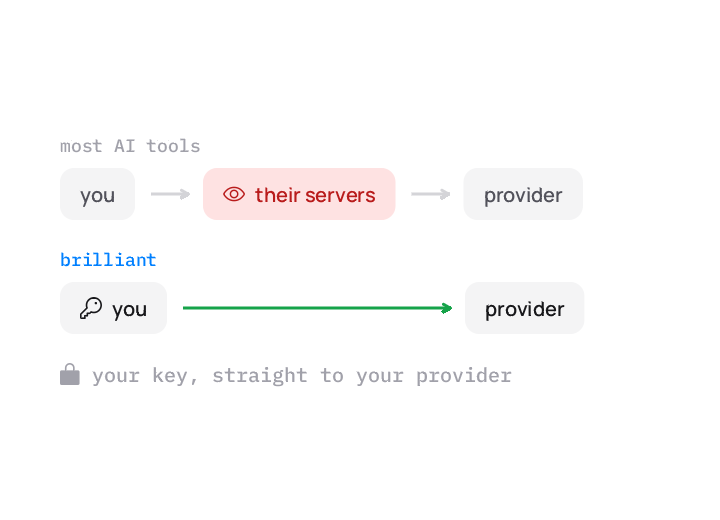
Written when the built-in chat was your-own-key only: why bringing your own key is a trust decision, how the multi-provider plumbing works, and the consent rules for anything leaving your machine. Brilliant AI (the default since September 2026) routes through Brilliant to Google; your own AI still never does.
Amichai Mantinband7 min readBrilliant's Blueprint: teaching agents to speak design
How a line-oriented DSL built for agents became Brilliant's only format: the file on disk, the realtime wire, and the language every agent speaks. Told as it happened, wrong turn included.
Amichai Mantinband14 min read